
What Is GTM Engineering? The Role Redefining B2B Outbound in 2026
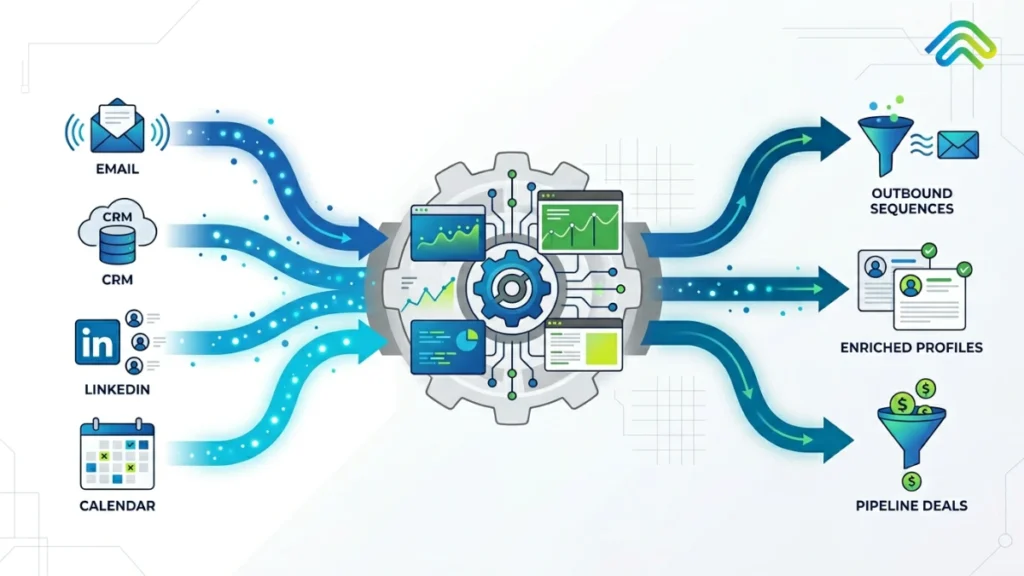
If you’ve been anywhere near B2B sales or marketing conversations lately, you’ve probably heard someone mention GTM engineering. Maybe it was a LinkedIn post about a “GTM engineer” replacing an entire SDR team. Maybe it was a job listing with a $135K median salary for a role that didn’t exist two years ago. Either way, the buzz is real. And it’s not just hype. GTM engineering is one of the fastest-growing disciplines in B2B revenue and for good reason. As customer acquisition costs climb (now roughly $2 in sales and marketing spend for every $1 of new ARR, a 14% increase since 2024), companies need a fundamentally different approach to building pipeline. This guide breaks down what GTM engineering actually is, why it emerged, how it works as a framework, the tools that power it, and, critically, where most GTM engineering setups still fall short on execution. What Is GTM Engineering? GTM engineering is the practice of designing, building, and maintaining automated systems that power B2B revenue operations. Instead of relying on manual sales outreach and disconnected marketing tools, GTM engineers create integrated workflows that connect data enrichment, lead scoring, CRM management, intent signals, and outbound sequences into a single, automated revenue engine. Think of it this way: if your go-to-market strategy is the what and why, GTM engineering is the how, the technical infrastructure that turns strategy into repeatable, scalable execution. The role sits at the intersection of sales, marketing, and engineering. A GTM engineer doesn’t just operate existing tools. They build the connective tissue between them, stitching together APIs, configuring automation workflows, setting up signal-based triggers, and designing data pipelines so that the right action reaches the right buyer at the right time. GTM Engineering in a Nutshell Aspect Description Definition The technical discipline of building automated systems that power B2B revenue operations Core Function Connects data, tools, and workflows into a unified pipeline generation engine Key Shift Moves outbound from volume-based (blast and pray) to signal-based (detect and act) Who Does It GTM engineers — a hybrid of RevOps, sales engineering, and data engineering Why Now Rising CAC, tool sprawl, and AI maturity make manual GTM unsustainable Why Did GTM Engineering Emerge? GTM engineering didn’t appear out of thin air. It emerged around 2024 as a response to three converging pressures that made traditional outbound models increasingly unsustainable. 1. Customer Acquisition Costs Are Rising Fast According to the 2025 Benchmarkit report, the blended customer acquisition cost (CAC) ratio is now 10% higher than in 2022. Companies are spending more to acquire each dollar of revenue, and simply adding more SDRs to the headcount doesn’t scale the way it once did. The math is clear: one strong GTM engineer who builds workflows that dozens of reps can leverage produces better ROI than hiring five additional SDRs to manually prospect from static lists. 2. Tool Sprawl Has Created Fragmentation The average B2B sales team now uses more than 10 different tools daily. Intent data flows in from one platform, enrichment happens in another, CRM sits separately, and outbound sequences run in yet another tool. The result is fragmented workflows, duplicated data, and reps who spend more time context-switching between tabs than actually selling. Research consistently shows that sales reps spend approximately 70% of their week on non-selling activities, admin tasks, data entry, research, and tool management. GTM engineering addresses this by creating a unified system where data flows automatically between tools, eliminating the manual glue work that eats up selling time. 3. Buyers Have Changed Over 80% of B2B buyers finalise mid-market purchasing decisions within six months, often without ever contacting a vendor directly. By the time a sales rep gets involved, the buyer has already done extensive independent research. This means outbound needs to be timely, contextual, and triggered by actual buying signals, not blasted from a static list. GTM engineering makes this possible by detecting intent signals (website visits, content downloads, job changes, funding announcements) and automatically routing them to the right action at the right time. What Does a GTM Engineer Actually Do? A GTM engineer’s day-to-day responsibilities vary depending on the company’s maturity, but the core work falls across six stages of what’s often called the GTM engineering framework. Here are the 6 stages GTM Engineering Framework: Stage 1: Data Enrichment Building and maintaining the data layer that powers everything else. This includes setting up enrichment pipelines using tools like Clay, Apollo, or ZoomInfo to automatically pull firmographic, technographic, and contact data into the CRM. Without clean, enriched data, everything downstream breaks. Stage 2: Signal Detection Configuring systems that monitor buyer intent signals, website visits, pricing page activity, content engagement, job changes, funding rounds, tech stack changes. The goal is to identify accounts showing active buying behaviour before a competitor does. Stage 3: Lead Scoring and Prioritisation Building scoring models that move beyond static firmographic rules. Modern GTM engineers use a combination of intent signals, engagement data, and contextual factors to dynamically rank which accounts deserve immediate attention. Stage 4: Workflow Automation Designing the automated workflows that connect signals to actions. When an account hits a threshold score, the system automatically triggers the right response, whether that’s adding the account to an outbound sequence, alerting a rep, or enriching the contact with additional buyer research. Stage 5: Outbound Execution Building multi-channel outbound sequences (email, LinkedIn, phone) that are triggered by signals rather than calendars. The personalisation layer is critical here, sequences pull enriched data to customise messaging at scale without losing relevance. Stage 6: Measurement and Optimisation Tracking the metrics that actually matter: meetings booked, pipeline generated, conversion rates by signal type, and cost per qualified meeting. GTM engineers run this as an iterative engineering loop, testing, measuring, and optimising continuously. GTM Engineering vs RevOps: What’s the Difference? This is one of the most common questions in the space, and the distinction matters. RevOps manages and optimises existing tools and processes. RevOps professionals maintain CRM hygiene, build reporting dashboards, manage sales territories, and ensure