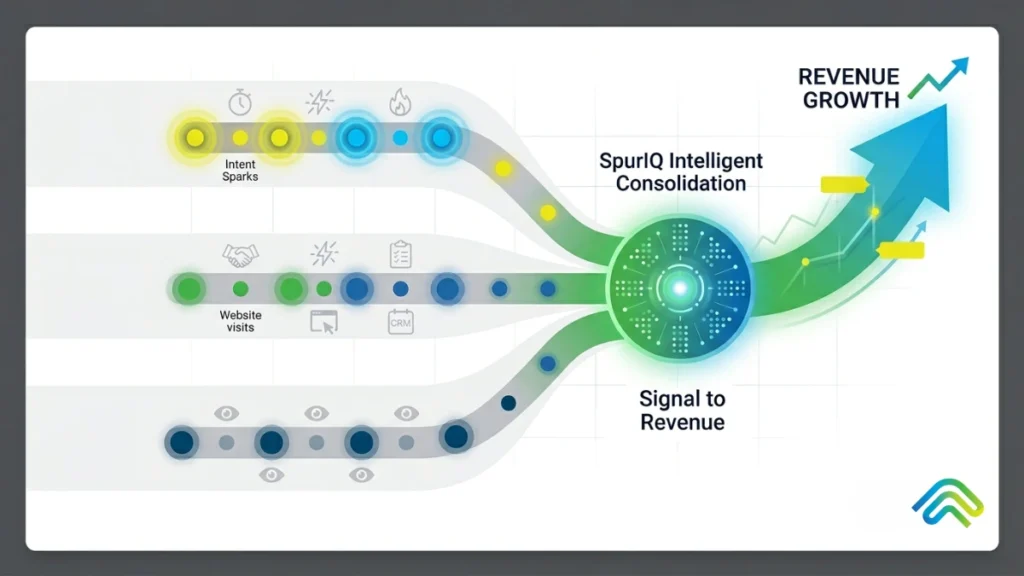
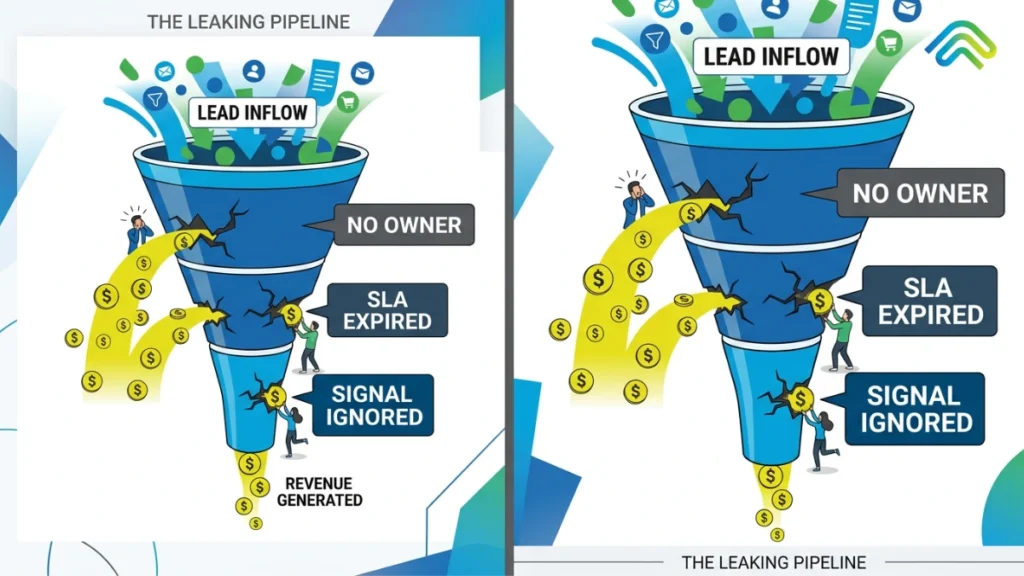
Every GTM team right now is being sold an AI sales agent, yet the category remains a complete mess. If you lead a revenue organization, your inbox is likely overflowing with pitches for these tools. Between 2025 and 2026 alone, hundreds of new AI sales agents flooded the market, each promising to automate your pipeline, scale your outreach, or magically double your revenue. If you lead a revenue organization, your inbox is likely overflowing with vendor pitches. Gartner predicts that by 2028, a third of all enterprise AI interactions will use autonomous agents rather than simple chat interfaces. Because of this massive shift, between 2025 and 2026 alone, hundreds of new AI sales agents flooded the market. The result? GTM teams are drowning in point solutions that generate endless activity but fail to move the needle on actual revenue. We are being sold a vision of autonomous growth, but the reality on the sales floor is often just more dashboard fatigue, siloed data, and unexecuted tasks. This guide provides a clear, hype-free definition of what an AI sales agent actually is, how it operates beneath the hood, and – most importantly – what the vast majority of these tools get fundamentally wrong. We will break down the mechanics of these systems and reveal why generating activity is not the same as executing revenue. By the end, you’ll understand why the future of B2B sales doesn’t rely on adding more noise to your tech stack, but on closing the gap between a buying signal and a completed action. What is an AI Sales Agent? AI Sales agent is a software system that autonomously performs multi-step sales tasks – such as account research, outreach drafting, lead qualification, CRM updates, and risk detection – using a combination of Large Language Models (LLMs), real-time data signals, and complex workflow logic. Unlike traditional sales software, which simply stores data until a human acts on it, a true sales AI agent is capable of reasoning, decision-making, and execution. It doesn’t just hold the list; it works the list. However, the market is rife with mislabeled tools. To cut through the noise, GTM leaders need to understand the distinct differences between an AI sales agent and legacy or adjacent technologies: How AI Sales Agents Work? The GTM agent role in AI sales is fundamentally about processing information and turning it into momentum. To do this, data-driven AI agents in B2B sales explained, operate across a five-stage loop: Step 1: Capture Signals The process begins with listening. The agent ingests data from across your ecosystem. These signals can be explicit (a prospect filling out a demo request) or implicit (a target account showing high intent on third-party sites, a champion changing jobs, or a stalled deal sitting in a specific CRM stage for too long). This includes intent data, product usage metrics, CRM events, email/calendar activity, and contact enrichment feeds. Step 2: Assess Context A raw signal is useless without context. In this stage, the agent stitches disparate signals together to form a cohesive, account-level or deal-level picture. If an intent tool flags a company, the agent cross-references your CRM to see if there is an active opportunity, checks past closed-lost notes, and maps the current buying committee. It builds the “why” behind the interaction. Step 3: Decision Making Armed with context, the agent uses its LLM reasoning capabilities to determine the next best action. You will understand whom you should reach out to, what channels you should use, what messaging framework best aligns with your customer’s specific pain-points, and the most optimal time to engage with your potential customers. Step 4: Action / Execution This is where the rubber meets the road. The agent executes the decision – drafting the hyper-personalized email, sending the LinkedIn connection request, updating the CRM fields, or routing the highly qualified lead to the appropriate Account Executive. Step 5: Learning Loop Finally, the agent measures the outcome of its actions. Did the email bounce? Did the prospect reply? Did the deal advance to the next stage? The system ingests this feedback to refine its future targeting, messaging, and timing. The Crucial Flaw: While this five-step loop looks perfect on paper, it represents a massive signal-to-action gap in reality. Most tools handle steps 1 through 3 perfectly. They capture signals, assemble context, and make brilliant decisions. But they stop short at step 4. They recommend actions to reps rather than executing them. They handle step 5 barely at all. As we’ll explore later, this failure to execute is where revenue teams are losing the most money. The Main Types of AI Sales Agents There are mainly five types of AI sales agents: Prospecting or Research agents, Outbound Outreach Agents, Conversational/Voice agents, Deal Execution Agents, and RevOps/Orchestration Agents. These AI agents for sales and marketing are categorized by specialized functions and deployed across the revenue lifecycle. Sales AI Agent Types What It Does Typical Use Case Prospecting / Research Agents These agents search the web and your databases to build targeted account lists, enrich contact details, and flag real-time buying signals. Sales teams use them for top-of-funnel targeting and expanding their Total Addressable Market (TAM). Outbound Outreach Agents These agents use account research to automatically draft and send highly personalized emails and LinkedIn messages. Teams use them to automate SDR workflows and scale their outbound pipeline creation. Conversational / Voice Agents These agents handle live conversations by making outbound calls or answering inbound dials to qualify leads. They are ideal for managing off-hours routing and automating outbound sales calls for lead qualification. Deal Execution Agents These agents monitor active deals, draft follow-up emails, update CRM fields, and alert managers about stalled opportunities. Sales leaders deploy them to boost AE productivity, keep forecasts clean, and enforce sales methodologies. RevOps / Orchestration Agents These agents act as the connective tissue for your tech stack by routing data between tools and enforcing workflow rules. RevOps teams rely on these AI agents to streamline sales pipeline management